Amplifying Community Impact Through Partners in Giving

Amplifying Community Impact Through Partners in Giving

Since its inception in 1973 as the State Employees Combined Campaign, Partners in Giving has raised $91 million for charitable causes. In 2025, the Partners in Giving Campaign raised over $2 million from more than 3,700 State of Wisconsin, Universities of Wisconsin and UW Health employees.

United Way of Dane County is honored to partner with 11 federated organizations to join nearly 500 individual charities in one workplace giving campaign for State employees. Thank you!

Celebrating the Most Successful Women United Brunch Yet!

Celebrating the Most Successful Women United Brunch Yet!

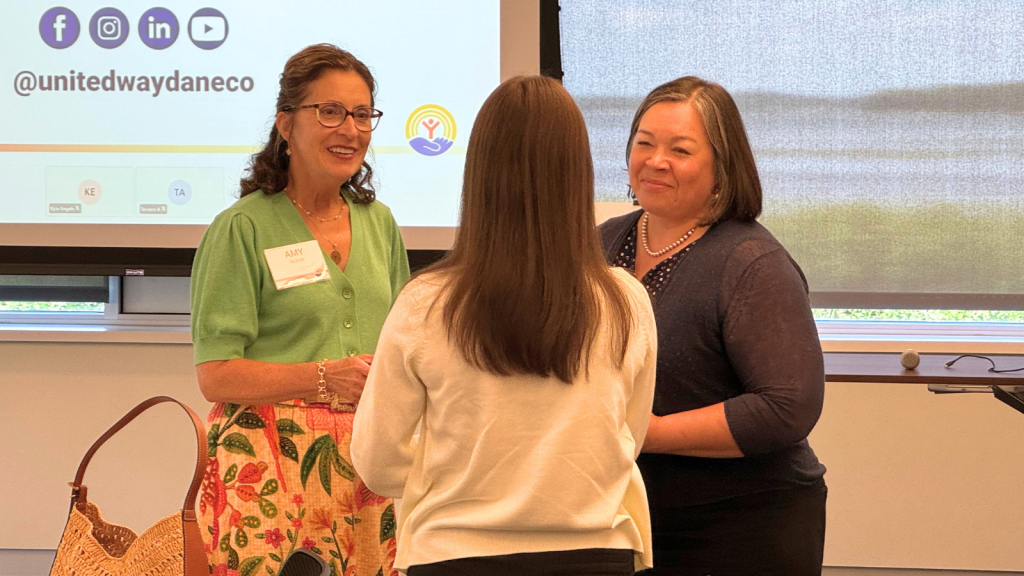
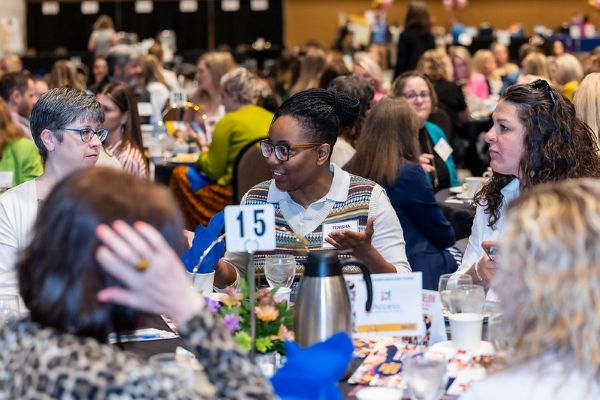
Last month, we held our 14th annual Women United Brunch. About 500 people came together to celebrate the caring power of women – and we honored Karen Kallerud as our Women United Philanthropy Award Recipient!

The morning consisted of some incredible networking, a moving and engaging program and a huge silent auction. We are excited to announce that through the generous donations of our sponsors and guests, we exceeded our goal of $110,000 and raised more than $130,000 for critical programs – the most ever raised at this event!

This support will empower the Financial Security pillar of our Plan for Community Well-Being – preventing homelessness, offering workforce development, building generational wealth and expanding access to high-quality childcare so that women in our community and their families have the chance to recover, to grow and to thrive. Because when women are financially secure – entire families and communities flourish.

Thank you to our presenting sponsor BMO, our gift matching sponsor, American Family Insurance, and our auction sponsor, Summit Credit Union! See a full list of sponsors online here.

Helping Neighbors Build New Chapters Through Re-Entry

Helping Neighbors Build New Chapters Through Re-Entry

A new chapter begins with opportunity, support and connection. Through United Way’s re-entry strategies and partnerships, individuals returning from incarceration are gaining the tools and support needed for themselves and their families.

While incarcerated, Isaac participated in a work release program and was able to retain his job after his release. He also took part in Circles of Support and Journey Home through United Way partner JustDane. With the help of his Resource Specialist, he secured permanent housing and continues to attend Service Fairs to explore additional resources. Members of his Circles of Support have remained engaged since his release, regularly checking in on his progress. Isaac has now been employed for four years, maintaining a positive outlook and staying focused on achieving his personal goals.

At United Way, we believe that everyone should have the opportunity to live in an affordable, safe, stable home. By partnering with organizations like JustDane and investing in re-entry strategies like Journey Home and Circles of Support, we help individuals returning from incarceration like Isaac to secure employment and stable housing. We work together to reduce stress, strengthen families and empower people to build better futures, creating a more resilient community and a stronger local economy.

United in Service: Day of Action June 21

United in Service:
Day of Action June 21

United Way of Dane County mobilizes the caring power of our community so all can thrive. We don’t do this work alone. We rely on our neighbors giving their time, talent and resources to strengthen our community and create lasting change together.

That’s why we’re inviting you to join us for Day of Action on June 21. On the longest day of the year, we encourage people across Dane County to come together in service to build a more caring, connected and thriving community for all.

As our nation approaches its 250th anniversary, we’re looking ahead with purpose, expanding opportunities to serve and creating pathways for everyone to thrive. Across the country, United Ways and other community organizations are working to make 2026 a record-setting year for volunteerism – the largest mobilization of service in U.S. history.

Be part of the movement! Visit www.VolunteerYourTime.org to find opportunities near you and help show what’s possible when we take action together!

United Way of Dane County Mourns the Passing of Michael Johnson

United Way of Dane County Mourns the Passing of Michael Johnson

United Way Mourns the Passing of Michael Johnson

A Message from Renee Moe

United Way of Dane County joins our community in mourning the loss of Michael Johnson, a visionary and dynamic community leader who led Boys & Girls Clubs of Dane County for nearly two decades.

Boys & Girls Clubs has been a steadfast partner with United Way since 1998, and we have seen first-hand the impact Michael’s leadership has had on the lives of countless community members, particularly youth and families.

Our partnership advanced Youth Opportunity strategies of the Plan for Community Well-Being, facilitating access to out-of-school learning opportunities to enhance students’ mastery of academic content. Through the AVID/TOPS+ program, we partnered to build students’ social/emotional skills and foster connection, belonging, leadership and academic success in this collaborative college and career readiness program for Dane County high school students.

When our community faced the unprecedented COVID crisis, Michael and the Boys & Girls Clubs teamed up with United Way and other local nonprofits to start a collaborative fundraising campaign to support emergency needs and recovery efforts. Through his leadership in the Law Enforcement and Leaders of Color Collaboration, he worked to keep protests peaceful after George Floyd’s murder. When a school shooting tore our community apart, Michael organized a vigil to help the community heal. These are just a few of the ways we partnered together.

On a personal note, Michael was a dear friend. He always centered community and our local families and children. His passion and bias for action came from that deep commitment. We often talked about how we were well matched. He was the quick-to-respond-mobilize-right-now leader while I was the disciplined-work-with-others-and-change-things-long-term leader. We regularly acknowledged our community needs both. I’m going to miss our texts and late-night conversations. And I’ll miss his amazing spirit, drive and fun. Wow, could Michael bring people together and get people to show up!

I had the beautiful opportunity to work with Michael’s wife Toya at United Way. She did extraordinary work on behalf of local older adults and families and has her own list of impressive community accomplishments. Through her, I got to know Michael and their children personally. To Toya and all who love and respect Michael, my deepest condolences. Michael’s life served so many and it’s heartbreaking that he is gone so soon.

United Way continues its strong partnership with Boys & Girls Clubs of Dane County. We continue to stand side-by-side with their Board led by Chris Fortune and team led by Taylor Jackson in their mission and service delivery. Rest well, Michael. Your work lives on.

Renee Moe
President & CEO
United Way of Dane County

Building a Better Dane County

Building a Better Dane County

Lead United is proud to welcome Tony Shepherd, a project manager at Findorff, to the Lead United Council. Tony brings a passion for growth, precision and community impact to both his professional and philanthropic work. 

“I’m honored to join Lead United Council to help support the work of United Way of Dane County,” Tony shares. “I moved to Madison 14 years ago chasing a dream of finding my own path in an ever-changing world and feel fortunate to have met many influential people and been provided opportunities that have shaped who I am today. I recognize that it remains critical to ensure all who choose to call Madison home receive the same opportunities to thrive.” 

Driven by a desire to make a lasting impact, Tony encourages integrity, curiosity and purpose in every challenge he takes on. Specializing in healthcare construction, he thrives in environments that push him to think critically, adapt quickly and lead with intention as he guides complex projects from concept to completion. 

Tony’s approach is rooted in a deep commitment to people and community. “I’m committed to ensuring our community remains inclusive of the variety of backgrounds, differences and originality of its occupants that makes Madison the incredible place to live that it is,” he says. “The foundation of our community is built on togetherness, innovation and challenging the status-quo, needed now more than ever.” 

A graduate of the University of Wisconsin–Madison with a degree in Civil Engineering, Tony has long been driven by a love of building. From his leadership on the nationally recognized Concrete Canoe Team to designing and building his own home in DeForest with his wife, his hands-on approach reflects both creativity and discipline. 

That same commitment carries into his community involvement as he joins the Lead United Council, expanding his dedication to service in Dane County. “By continuing to invest in our community, supporting one another and remaining connected we can positively impact the challenges we currently face and inspire others to join in the action,” Tony adds. 

Tony is eager to contribute to United Way’s mission and create meaningful change. “I’m excited to contribute to the critical work of United Way of Dane County, achieving measurable results that changes lives and inspires each of one us to be the best version of ourselves.” 

May 19, 2026: By Youth For Youth (BYFY) Awards $26,130 to Local Youth Programs

By Youth For Youth (BYFY) Awards $26,130 to Local Youth Programs

Link to PDF Here

High school leaders review and award City, County and United Way funds that will benefit youth-led organizations and youth programs in Dane County.

MADISON, Wis. (May 19, 2026) – In April 2026, the By Youth for Youth committee awarded $26,130 to 9 local youth programs and projects. By Youth For Youth is a committee of Dane County high school students that make local investment decisions to support youth-led programs and projects in Dane County. The BYFY program is a collaborative effort between UW-Madison Extension’s Positive Youth Development Institute, the Dane County Youth Commission, the City of Madison and United Way of Dane County. Funding for BYFY is provided through a combination of City, County and United Way funds, with a special thank you to the Madison Civics Club for awarding the BYFY program with a generous endowment in support of continuous youth leadership.

This year’s BYFY cohort included 24 Dane County high school students from 9th to 12th grade, spread across the County from 11 different high schools including Belleville, Cambridge, Edgewood, Madison Country Day, Middleton, MMSD (East, La Follette, Memorial, West), Sun Prairie and Waunakee.

By Youth For Youth’s chosen funding priorities for 2026 focused on addressing mental health (anxiety, depression, suicide ideation & self-harm), positive experiences inside and outside of school (belonging, equity & inclusion, bullying), food security (food access, nutrition for low-income youth), immigration (accessing services & resources), sexual assault prevention (accessing services & resources) and climate change.

Funding highlights:

  • Wisconsin Heights School District: BYFY is proud to fund the “Closegap Initiative,” supporting the training and implementation of a daily digital check-in for students that enables early mental health intervention in school settings.
  • Oregon High School: BYFY is proud to fund the “Run-Walk for Sexual Assault Awareness Month” event hosted by the Imagine Club, a youth-led educational fundraiser supporting survivors of sexual violence. Proceeds are donated to local organizations in Dane County.
  • Rooted, Inc.: BYFY is proud to fund the “Rooted in Community Gardens” project, where youth update and fix existing garden beds that are used for local families to grow their own personal produce
  • Dairyland Dancing Diamonds: “Nourish & Flourish Initiative”
  • Wisconsin Heights School District: “Mental Health Closegap Initiative”
  • Rooted Inc.: “Rooted in Community Gardens”
  • East High School’s WAVE Club: “Menstrual Equity Project”
  • Oregon High School’s Imagine Club: “Run-Walk for Sexual Assault Awareness Month”
  • Cardea: “American Heart Association & National Alliance on Mental Illness 5K Run”
  • Elver Park Neighborhood Center: “Team Building Through Art Experiences”
  • Meadowood Neighborhood Center: “Plates with Purpose”
  • MTZ Charitable Organization: “Planted with Purpose”

“By Youth For Youth gives the next generation of community leaders an opportunity to make a real impact at a young age. These inspiring teens are learning how to collaborate, communicate effectively and accelerate results, all in order to help more people and change more lives. We are proud to mobilize Dane County’s up and coming thought leaders.” – Renee Moe, President & CEO of United Way of Dane County

“By Youth For Youth is a one-of-a-kind youth program, and the City of Madison is proud to partner with them. BYFY puts decision-making power in the hands of young people in real and structural ways, allowing participants to fund other youth programs, preparing them to be community leaders and participate in policy-making and funding decisions. BYFY supports young people in understanding and exercising the power they have to better their communities.” – Satya Rhodes-Conway, Mayor of Madison

“We are honored to provide funding to By Youth For Youth each year. This program provides Dane County high school students the experience of allocating tangible funds that positively impact youth county-wide. It’s a unique and wonderful experience for youth interested in making a difference in their communities.” – Melissa Agard, Dane County Executive

2025–2026 BYFY Committee Members:

Zoha Adnan, Madison Country Day

Hannah-Kay Amuzu-Gassou, Edgewood High School

Fatima Romero Alvarado, Madison La Follette High School

Amogh Avadhani, Middleton High School

Brandon Ballweg, Waunakee High School

Brooke Ballweg, Waunakee High School

Ruth Bawithadim, Sun Prairie West High School

Aditya Behara, Middleton High School

Jailen Clark, Madison La Follette High School

Denise Espirito Santo Dias, Waunakee High School

Sophia Downs, Cambridge High School

Hanshika JaiPravinKumar, Sun Prairie West High School

Angelina Li, Waunakee High School

Sharon Medina, Madison West High School

Andry Negovan, Madison Memorial High School

Kobe Ni, Waunakee High School

Christian Rubio Robledo, Madison La Follette High School

Frances Schaller-Davis, Madison East High School

Jinal Shah, Middleton High School

Lily Shapiro, Madison West High School

Evelyn Soukup, Waunakee High School

Jill Thompson, Cambridge High School

Faith Waefler, Belleville High School

Yesenia Naomy Villagomez, Madison La Follette High School

By Youth For Youth Staff:

Nathan Beck, City of Madison

Taylor Seale, UW-Madison Extension

Michelle Van Asten, United Way of Dane County

###

About United Way of Dane County
United Way of Dane County mobilizes the caring power of our community to close gaps and open opportunities so all can thrive. From advancing health and education to strengthening livelihoods and local resilience, we connect people to possibility. With a mission to unite the community to achieve measurable results that change lives, we work collaboratively with local nonprofits, businesses, community leaders, donors and volunteers to multiply impact and solve big-picture issues no one person or organization can address alone. United Way holds ourselves and our partners accountable for effective use of resources and measurable results. Together, we are The Power of Caring. Working for All. Visit www.unitedwaydanecounty.org to learn more.

May 13, 2026: Women United Brunch raises over $130K for financial independence programs

Women United Brunch raises over $130K for financial independence programs

MADISON (WKOW) — The 14th annual Women United Brunch hosted by the United Way of Dane County raised more than $130,000 on Wednesday.

The goal was to raise money to support programs for women’s financial independence and stability. People learned about the evolution of Women United, which is focused on helping families be better positioned to thrive.

“Individuals who perhaps are displaced in the workforce, oftentimes are shocked by the lack of resources they have, but they still have to keep paying for food and housing,” said Renee Moe, president and CEO of United Way Dane County. “And so what United Way can do is really help partner and be a bridge with nonprofits across the community to help individuals and families get to a place of self sufficiency so that they can grow and thrive.”

WKOW was a proud sponsor of the event.

May 12, 2026: A seismic shift in federal granting policy has nonprofits scrambling

A Seismic Shift in Federal Granting Policy has Nonprofits Scrambling

Camille Carter has a familiar lament in the nonprofit world.

Carter, president of the Madison Black Chamber of Commerce, a nonprofit that provides services to Black-owned businesses, has run out of federal grants and is looking for new funding sources to maintain its support of Black-owned businesses and Black entrepreneurs.

Having used a $3.6 million American Rescue Plan Act grant from the COVID era to build capacity, a lack of continuing federal support has placed the organization in a position where it has to pivot in order to sustain that capacity, Carter said.

At the moment, she said none of the chamber’s remaining employees are getting paid a salary or benefits as the organization tries to make do with modest annual membership dues from its roughly 200 members in southcentral Wisconsin.

“We are going to have to potentially get creative,” Carter said. “We currently have some funding to keep the chamber’s doors open and support basic programming. What we don’t have is the budget to support staffing for the organization and right now my No. 1 mission is to refund the organization.

“This work takes people,” she said. “It does not run on its own and in order to uplift people and to support them, we have to have the staff in order to do that.”

Thanks to a shift in federal priorities — including what Carter called an attack on diversity, equity and inclusion under President Donald Trump — her plight is familiar to many nonprofit organizations across the country.

They have experienced the cessation of contractually obligated federal funds for programming, stop-work orders, disruption to payment systems, threats of targeting nonprofits and uncertainty due to recent government shutdowns.

According to some nonprofit executives, the shift has caused significant disruption of existing funding and relationships between the federal government and state and local government and nonprofit partners.

Diane Yentel, president and CEO of the National Council of Nonprofits, said in February ahead of Trump’s State of the Union address that nonprofits are strained but resilient as payment delays and funding pauses disrupt their operations.

Nonprofits depend on consistency, clarity and reliability in federal policy, but now they need to navigate a new landscape.

Shifting priorities

The policy shifts are reflected in a variety of executive orders, agency directives and legislation. Among the most controversial alterations are cuts in Medicaid spending, including decreases in eligibility and increases in administrative and work requirements for food assistance benefits and health care access.

The shifts keep coming. The most recent example was on March 26 when the Trump administration, which views diversity, equity and inclusion programs as racially discriminatory, issued an executive order prohibiting the practice of DEI in federal contracting (e.g., vendor agreements), including program participation and the deployment of a contracting entity’s resources.

The sheer number of changes has prompted the United Way of Dane County and Goodman Nonprofit Center (a project of the Madison Community Foundation) to partner with the University of Wisconsin-Madison Center for Community and Nonprofit Studies to collect and assess information on the policy changes and their anticipated effects.

Lauren Martin, senior director of community impact for the United Way of Dane County, said the purpose of the partnership is to help nonprofits understand and react to the changes.

Martin said the Center for Community and Nonprofit Studies website offers updated information so organizations can make contingency plans when there is a change from a specific funding source.

The partnership began with a survey of local nonprofit leaders and its analysis focuses on the following community areas: basic and household needs; heath care; education, child care and the arts; workforce and immigration; and civic health and participation.

“What we have heard and have been hearing since the beginning of last year is just the fear of loss of potential funding,” Martin said. “There was an actual loss of some funding in our community but there has been significant disruptions to that reliability of contractual relationships that the study found as well.

“And there is the ongoing uncertainty and work that has to be done once something is announced,” Martin said.

Since early 2025, there has been a steady drumbeat of alterations as the Trump-appointed Department of Government Efficiency or DOGE significantly altered funding to programs such as AmeriCorps and disrupted the payment system for programs like Head Start.

One local casualty of reduced AmeriCorps funding is the shuttering of long-standing elementary school Schools of Hope and high school Achievement Connections programs of the Madison Metropolitan School District and UWDC.

Starting in the 2026–27 school year, the organizations will try to provide student support by other means, and they cited reduced federal support of AmeriCorps, the independent U.S. agency through which they are funded, as the reason.

Also, the 43-day federal government shutdown in the fall delayed payments to 700,000 beneficiaries of Wisconsin’s FoodShare program until a federal judge ordered the payments released. The benefits are fully funded by the federal government as part of the Supplemental Nutrition Assistance Program (SNAP).

While FoodShare benefits are used at grocery stores, nonprofit organizations and food banks that distribute food for those in need would have been relied on more heavily in the absence of those payments.

“At the end of last year, when there were some potential changes to FoodShare, that was one direct place where changes were happening,” Martin said. “Individuals were looking for additional resources to plan to meet their needs but in general there’s also changes that are affecting nonprofits that are also affecting our communities.”

One adjustment the United Way made in response to this instability was extending its impact grants into a third year to support affected nonprofits — an approximately $5 million commitment, pending the results of its annual community campaign.

Mary Beth Collins, executive director of the Center for Community and Nonprofit Studies, said nonprofits should lean into collaborations.

“We’re seeing conversations happening with cross-sectors, potential activities and collaborations that can address some of these more specific policy shifts,” she said.

For example, regarding new work requirements for Medicaid, Collins said there are already conversations happening about how the nonprofit sector can work with public sector agencies and those that provide basic needs services to make sure people are getting the information they need to meet those work requirements.

“We will continue to update the (website) with further information because … it’s a fluid situation and we’re continuing to learn things about impacts and whether certain executive orders and other actions will even stick because some of them are being challenged (in court),” Collins said.

“It’s about working double time. It’s having to be more creative. It’s having to be more and more anticipatory about what is actually happening, and it is, as usual, being extremely dedicated and creative in that,” she said.

“It is a lot to ask of a sector that is often the last stop for our communities, especially those that are most vulnerable.”

Transition period

For the Madison Black Chamber and the services it provides local entrepreneurs, Carter said membership fees only covered 5 to 7% of its budget historically, so a restoration of grant funding would enable it to better serve minority businesses.

“Right now, we are retooling our budget,” Carter said, “and we’re still going to do our best to deliver on a lot of our promotional services that really elevate our businesses and help our businesses connect with their customers via some of our events, in particular.

“I imagine that the way that we’ve done them before will shift because it will require a great deal of financial resources to support those efforts,”

Carter said. “So, there will be some changes and some transitions. I just don’t know to what level at this point in time.”

Tocqueville Spring Conversation: Coming Together for Community Impact

Tocqueville Spring Conversation: Coming Together for Community Impact

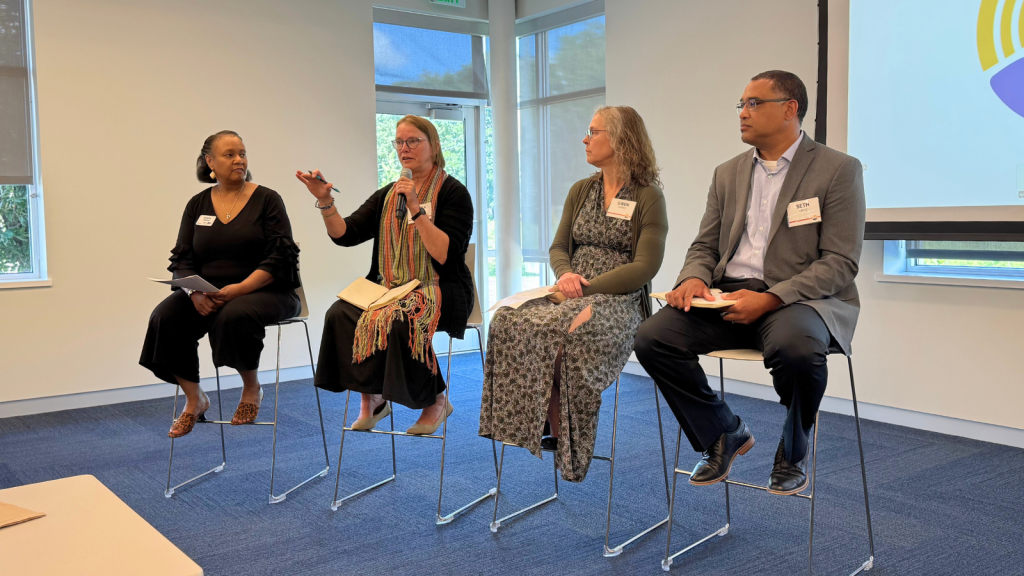
Thank you to everyone who attended our first Tocqueville Conversation of the year on April 29, generously hosted by Findorff. Members and guests gathered for a discussion around the measurable impact we achieved in our community in 2025 and the opportunities ahead.  

Renee Moe, United Way of Dane County President & CEO, provided a foundation for the current moment our community faces, followed by a presentation on community level data by Vice President of Community Impact, Jody Bartnick. These results illustrated how unrestricted gifts are leveraged for broader impact and highlighted the critical role Tocqueville members play in strengthening our community. 

The group then moved into smallgroup discussions where attendees had the opportunity to engage directly with United Way Community Impact directors around Financial Security, Healthy Community and Youth Opportunity. We reflected on the data and explored how community challenges and solutions are showing up in workplaces and partnerships across Dane County. 

Here are some of the highlights from those conversations: 

Financial Security: 

This group discussed preventing evictions while addressing long-term housing stability. Participants discussed Women & Wealth, workforce pathways and affordable housing efforts, celebrating strong program success while examining how to better support families still struggling. The conversation emphasized balancing immediate needs with systemic solutions through coordinated tools, partnerships and community investment. 

Healthy Community: 

Personal stories reinforced that navigating health care is complex for many, even those with resources, and that strong case management and attention to social determinants of health like neighborhood safety are essential for better outcomes. The group discussed how fear, particularly around immigration enforcement, is preventing some families from accessing health care, affecting both patients and frontline providers. Participants emphasized the need for culturally relevant, trusted care.   

Youth Opportunity: 

Participants explored how youth success is measured, including questions about racial disparities in academic achievement outcomes. The group discussed alternative pathways for students who may not thrive in traditional school settings and how changing tutoring models affect families and students. The shared conclusion was that the community must do more to support diverse paths to success for young people, including supporting out of school time and reducing school mobility. 

Deep Dive on 2025 Results and 2026 Trends: 

This discussion focused on using data to reduce duplication across nonprofits while addressing growing needs amid shifting donor engagement. Participants considered strategies to better reach younger and remote workers and expand beyond traditional workplace campaigns. Collaboration and innovation were seen as key to sustaining long-term impact. 

These conversations reinforce a shared belief: when more people have what they need to succeed, our entire community is stronger.